
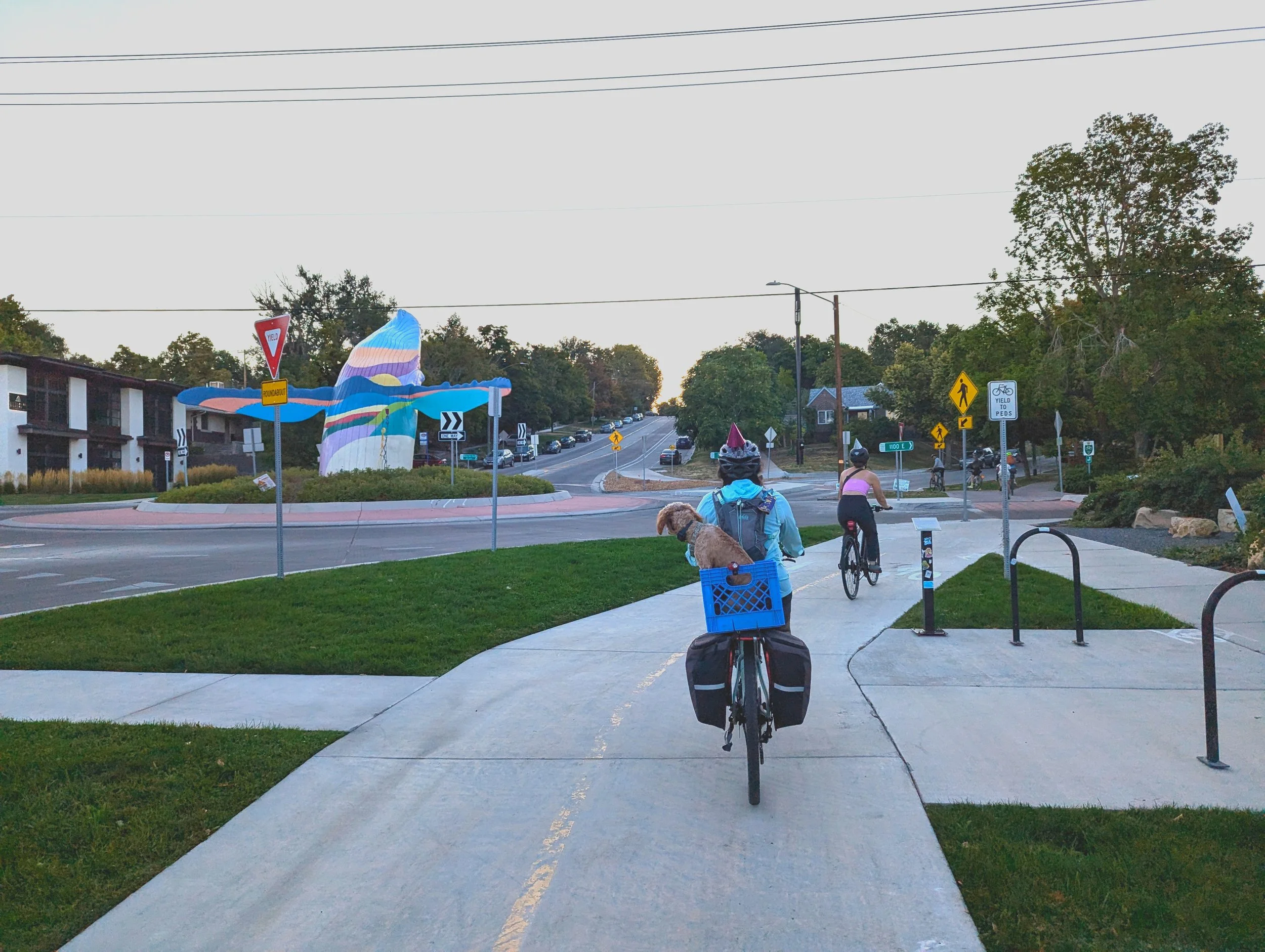
Biking in Salt Lake City

Salt Lake City’s Low-Stress Bike Network
We’ve partnered with Bike Streets to produce a map of Salt Lake City’s low-stress bike network. This isn’t your typical bike map—instead of simply showing what streets have bike lanes, this map incorporates local knowledge to recommend the best routes, using a combination of safe infrastructure, neighborhood streets, cut throughs, and improved intersection crossings. Even better, the map is integrated in the free Bike Streets app, allowing for mapping, navigation, and seamless updates. You can even suggest new routes and point out hazards or construction. Track your rides to contribute to SLC’s count of car trips replaced through biking, which we can use to advocate for more infrastructure.

Salt Lake City Bicycle Laws
We recommend taking a look at Bike Utah’s overview of state bicycling laws in Utah. Notably, Utah has a stop-as-yield law, meaning cyclists can treat stop signs as yield signs. Practically, this means you can treat a stop controlled intersection as you otherwise would, but you don’t have to come to a complete stop unless necessary. Utah law also treats cyclists on the sidewalk as pedestrians. We don’t recommend extensive sidewalk riding since drivers are likely to be less aware of you, but this can be useful for short deviations to utilize marked crosswalks.
Additionally, each city has their own set of ordinances which can impose further restrictions on bicycles. Here are some laws specific to Salt Lake City. Visit the city website for more information.
No sidewalk riding in the Downtown district (see map)
Register your bike with the SLC Police Department (in case of theft!)
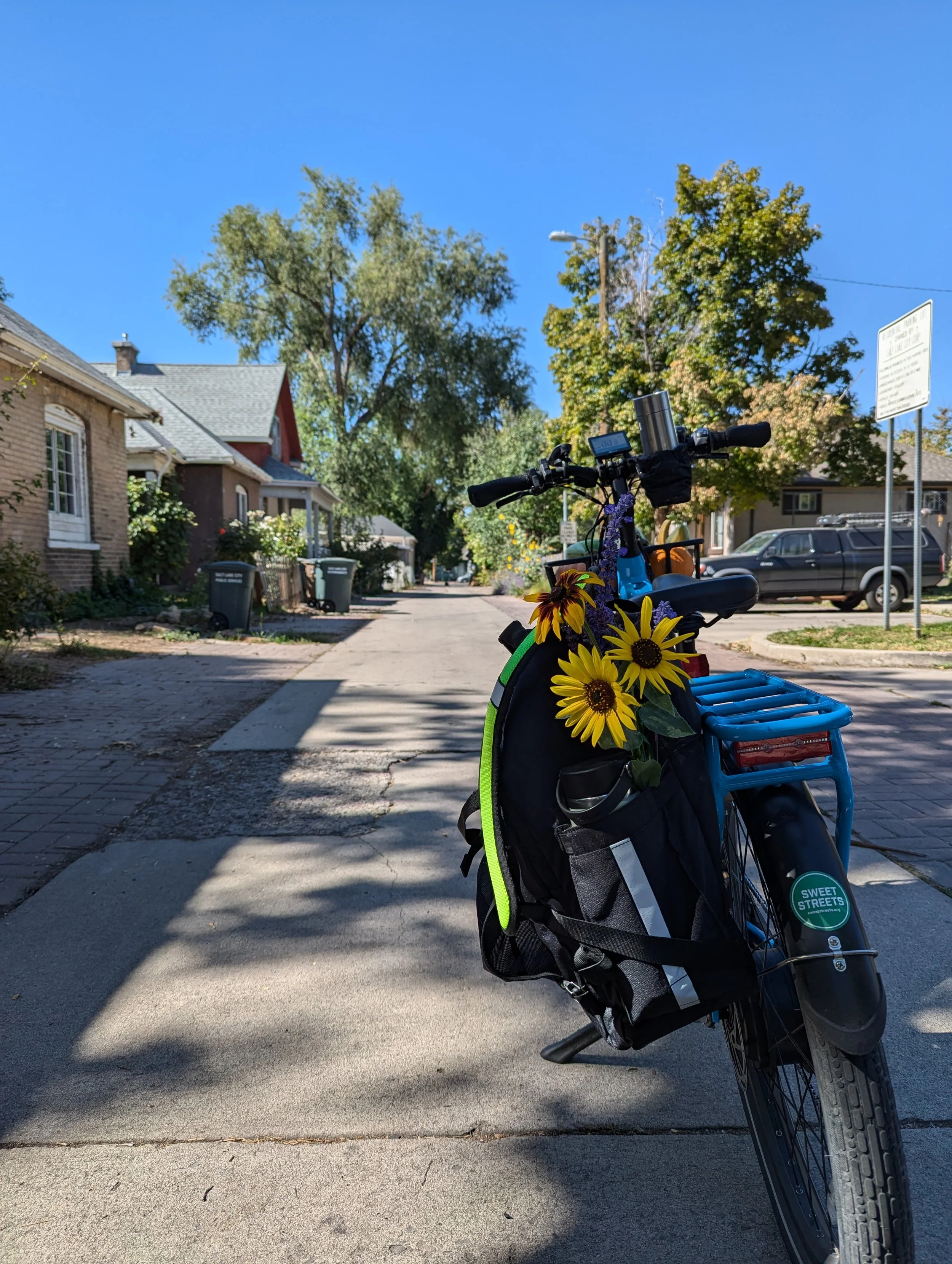
Tips & Tricks
Relax! Give yourself extra time to get where you’re going, and no need to race, run a red light, or bring road rage onto your bicycle.
Be predictable—keep right, signal, and follow traffic control.
Keep your head on a swivel, especially at intersections and driveways. Always watch for left and right turning drivers.
Don’t assume a driver has seen you. Err on the side of slowing down or stopping if you’re not sure.
Always yield to pedestrians. If you’re on a sidewalk or in a crosswalk you are a guest in the space. Even if they walk in the bike lane, at least they’re rarely putting you in danger, unlike drivers!
Get a bike bell and use it so people know you are about to pass them on multi-use paths. Look for one that gives a pleasant “ding.”
Use marked crossings at unsignalized intersections. Make sure you enter the sidewalk first (to “become a pedestrian”), stop, and check that drivers have yielded. At some intersections, there are ramps built specifically for this purpose. If you prefer staying in the street, then you behave like a driver and wait for a clearing before crossing.
When making a left turn, you may either merge with traffic in the dedicated turn lane, or stay in the bike lane and ride to the front of the other direction of travel, known as a “2 stage left.” Many new street designs include “left turn boxes” to help with safe positioning. See this diagram for visual instructions.
Frequently Asked Questions
-
Salt Lake City has put in considerable effort to make its streets safer, but there’s still much to do. Biking for transportation can be intimidating to start, and we can’t say it’s without its risks. We recommend sticking to low-stress routes and remaining vigilant as you interact with drivers.
-
We highly recommend joining a casual group ride, such as Bike Club. Let them know you’re new to biking and they’re happy to help out, plus make a friend along the way! Check out our events page for more.
-
If you live in proximity of SLC’s bike share, GREENbike, it’s a great, affordable option to get started biking. If you’re looking for your own bike, check out the Salt Lake City Bicycle Collective for affordable used bikes. Be aware of hills between your home and destination consider if you need a bike capable of going up steep hills.
-
The stereotypical image of a cyclist is someone wearing spandex and clip in shoes. But when biking for transportation, comfort and convenience is the name of the game. You can bike in your regular clothing so long as you’re able to pedal. In cold weather, wear breathable layers and a jacket, plus warm gloves or mittens and something to keep your head and neck warm, like a balaclava or scarf. In the rain, a waterproof jacket and water resistant pants will work. Some hiking pants are already water resistant, so check your closet first.
-
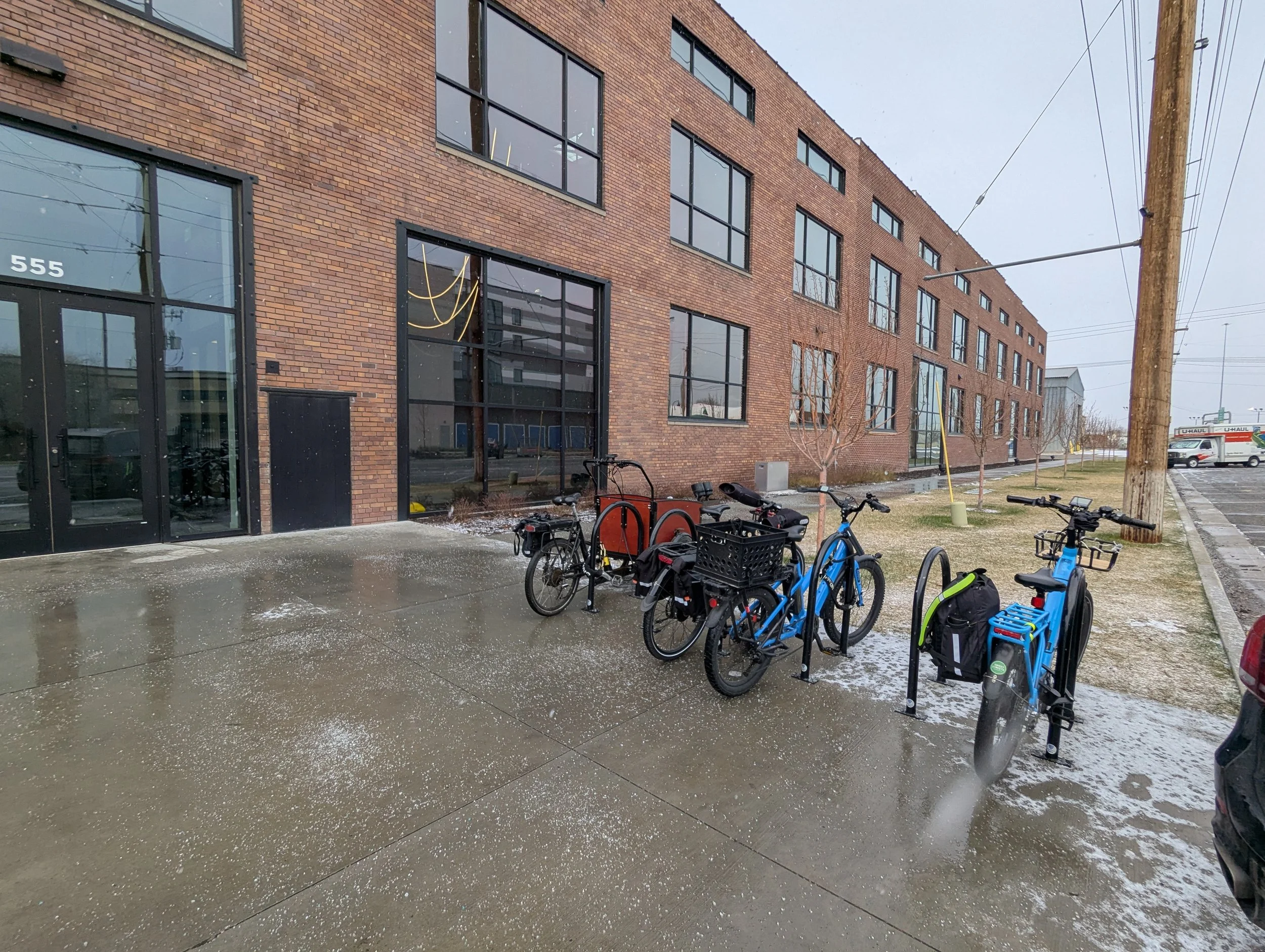
It’s recommended to use at least a U shaped lock through your bike frame. If you have quick release wheels, it’s a great idea to use a supplemental cable to keep them secure. Make sure you lock to something that cannot be tampered with, such as one of the city’s inverted U shaped bike racks.
-
Avoid leaving your bike outside overnight. If storing in a shed, patio, or garage, make sure those are secure, and consider locking the bike to something just in case. In an apartment, bring your bike in if it’s feasible or use secure storage. Secure bike storage may be difficult in some apartments, some alternatives include using GREENbike bike share, using a folding bike, or using an older, less valuable bike so it’s less of a target.
-
A combination of a rear or front rack, straps, and backpacks or pannier bags can go a long way. Try taking smaller, more frequent trips to the grocery store and chain your trips with other errands to save time. Cargo and utility e-bikes can also help with Costco runs (they have bike racks!), but are a bigger investment. It might take some getting used to, but see what you can do by supporting your neighborhood grocer.
-
There are many options to consider. First, look for the route with the most gentle ascent. Second, use transit to your advantage. You can put your bike on the front of the bus or take it with you on TRAX. Then simply bike back down the hill. Third, you can consider an e-bike. They’re a good investment if you live or work on a hill or have a longer commute.
-
Yes! Many parents bike with their children. Some use cargo bikes with child seats, others use a variety of equipment specifically designed to safely carry a child on a regular bike. Your child will love getting out and experiencing our beautiful city!
-
Yes! While SLC does get a bit of snow in the winter, individual storms are usually small and much of the winter will have clear streets. Just be aware of snow and ice and avoid traveling during a storm just like you would as a driver (or take transit!) Salt Lake City regularly clears bike lanes during winter. They don’t always get 100% of the bike lanes clear, so pay close attention. You don’t need studded tires, but wider, knobby tires are very helpful while snow is around (at least hybrid tires).
-
Beyond urban trails and parks (more on these in an upcoming post), the main considerations are safe routes to the trailhead and a safe place to secure your bike at the trail head. There’s still much to do on this front, so be sure to speak up whenever there are public engagement opportunities.
However, Salt Lake City has begun installing secure bike racks at several trailheads that are safe to bike to. The Bonneville Blvd Trailhead has a great view and access to several trails. The Popperton Park Trailhead has restrooms plus hiking and biking trails. The Emigration Trailhead has access to the Bonneville Shoreline Trail. Ensign Downs Park has bike racks very close to the popular Ensign Peak Trail.
Please note that all of these trailheads will require biking up hills, so plan accordingly!
Benefits of Biking for Transportation
Community
Biking takes you to more neighborhood and mixed use streets at a slower pace, meaning more opportunities for chance encounters with friends and neighbors.
Better Health
Making biking part of your daily routine provides regular exercise and increased time spent outdoors, boosting mental and physical health.
Save Money
Trading your car for a bike can save over $10,000 annually, between payments, insurance, maintenance, and gas. Plus, you’re more likely to spend money at local businesses, keeping wealth in your community.
Reduce Traffic, Pollution
A car off the road means less traffic and pollution for everyone, plus less parking lots needed, preserving open green space and housing.
Common Myths About Biking
-
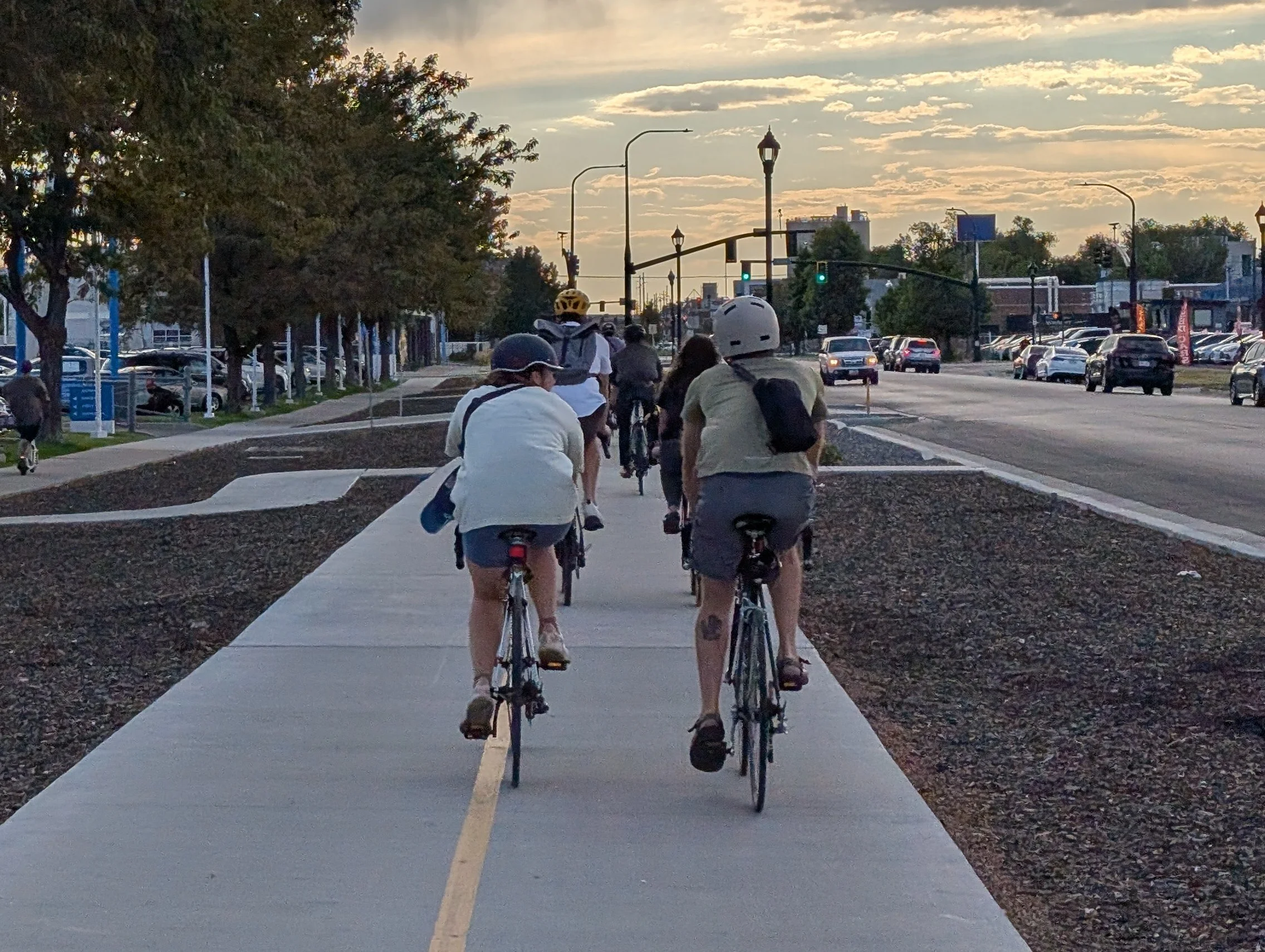
While cyclists (let’s assume who never drive a car) don’t pay gas tax, this is only a fraction of street maintenance funds. According to the Tax Foundation, only 44% of road funding is covered by road usage taxes in Utah, meaning the rest is subsidized by taxpayers, including cyclists. Additionally, many major projects between 2019-2026 were funded through the Funding Our Future bond. Other funding sources include sales tax, impact fees, city General and Enterprise funds, and federal/state grants. So while it’s true that someone who doesn’t own a car pays less in taxes (no gas tax), they still significantly contribute to street maintenance. And that seems fair, given bicycles require much less street space. Just look at the 10-ft wide 9 Line Trail and minimal space taken by bike racks vs. 3 10+ft motor vehicle lanes and 2 parking lanes on 900 South.
-
Let’s flip back through the Utah Driver’s Education Handbook, recalling basic traffic laws like coming to a complete stop behind the stop line at an intersection or crosswalk, and before making a right turn on red. Now go out and observe driver behavior. How many drivers follow those laws? The research is limited on driver vs. cyclists compliance, but findings generally indicate similar compliance. The major difference is that cars weigh thousands of pounds and move much faster, having the potential for violent crashes.
And while cyclists are generally under the same obligations as drivers, following the same rule book doesn’t make much sense, and most streets are not designed well to accommodate cyclists, with some intersections not even triggering a green light. This results in some cyclists breaking laws for self preservation and safety. Fortunately in Utah, we have a “stop-as-yield” law, which essentially means cyclists don’t have to come to a complete stop as long as they yield to those who have the right of way.
-
That’s what was said when our first protected bike lanes went in on 300 South. Yet, follow-up surveys showed the opposite. When done well, bike lanes can provide more safe options for transportation and provide more buffer space between pedestrians and fast moving vehicle traffic. Trips by bike are also usually local, meaning less likely to just be passing through as drivers usually are, and it’s much easier to spontaneously stop and visit a business while on a bike.
To be clear, simply adding a bike lane won’t create a good outcome alone. The environment needs to be people-oriented, making people want to walk and bike and linger in the space. In any case, study after study finds neutral to positive outcomes comparing before and after bike lane installation.
And you don’t have to take our word for it. Visit 900 South and the 9 Line Trail for yourself. This corridor is booming with new, popular local businesses after the street reconstruction completed at the end of 2023.
-
Before we get into the numbers, let’s just reset and calibrate our eyes before heading outside. Now, specifically look for parking regardless of your destination. Street parking, multi-story parking garages, lots in front of businesses, lots to the side, lots in the back. Full blocks of parking. Parking is everywhere. But the parking spot directly in front of your destination for that single trip is unlikely to be available. That’s the dilemma. If you have the ability to walk a block, shift towards accepting that short walk. And perhaps we should be reallocating those front row spots for those with accessibility needs, quick drop-offs and pickups, and deliveries.
Now, for the numbers. Looking at off-street parking alone, 29% of the downtown area is parking. Add in 10 ft strips of on-street parking on most every block face. That’s a whole lot of asphalt! So what about these street safety and bike lane projects? The state department of transportation, UDOT, has actually studied this. On projects between 2015-2025, the reduction in on-street parking alone was 6%. This includes large projects that had redundant parking removed, like on 300 West below 900 South. On the flip side, we have better safety and transportation choices. Not bad at all!
And the city does consider parking demand when it redesigns its streets. Just look at 900 South. The Central Ninth district had a net gain of 37 on-street parking spots. Ironically, this neighborhood is known for the 9 Line Trail and as a part of the Green Loop (a linear park space), yet most of the area remains paved for driving and parking. And parking complaints remain regardless, because that front row spot is almost never available in this popular neighborhood. For those 1-2 people to leave their car parked for free on extremely valuable land for 2 hours at a time.
Street safety and bike lane projects are not causing the parking issues. The space inefficiency of cars has always been the root of the problem. And we can certainly make better use of the parking we already have.
-
Put yourself into the shoes of someone who gets around by bike. There’s a safe protected bike lane spaced a mile apart (that’s 8 SLC blocks), but no safe infrastructure between them. How do they get to destinations between the protected bike lanes? Better yet, how do they access them from where they live? The logic doesn’t make sense unless you only bike for sport and drive to a parking lot.
Different streets can prioritize different uses, but there should still be safe options for everyone to get around. Freeways are a different story, but urban streets should prioritize people. When it comes down to it, if it’s safe enough for a child to bike on a street, everyone win in terms of safety. And safe streets are livable streets, ones where people and businesses thrive.