
We’ll split this up into three different sections, Sweet Streets specific, then local and state policy/infrastructure.
Sweet Streets
The Good
Organized opposition to Utah Senate Bill 195, preventing the worst versions of this moratorium on safe streets
The Explore the 9 Line Trail event was a huge success, trail counter data picked up 1,900 walking and biking trips on the 9 Line that day!
Held our 4th Annual Bike/Walk event
Contributed to a successful Capital Improvement Program (CIP) application for the 600 East Neighborhood Byway
Submitted additional neighborhood byway CIP applications for the coming year
Hosted SLC’s 2nd World Day of Remembrance for Road Traffic Victims
Continued regular social hour events and began open committee meetings
Held our first bike valet at the 9th and 9th Street Festival
Needs Work
As a volunteer-run organization, managing volunteers and ways to get involved is always challenging!
Refreshing our campaigns
Outreach and tabling at more public events
Getting our merch store set up and running
On the Horizon
Stay tuned - we’re working on planning out the year! Consider joining our January committee meeting if you want to get involved, more details in the next section of the newsletter.
Salt Lake City
The Good
Completion of several major projects, such as 2100 S, the 300 W Bikeway Expansion, the 400 S Viaduct Trail, 1300 East, and 600 North slated to be completed later this year
Build out of 5.7 miles of neighborhood byways (3.2 miles in Jordan Meadows and Westpointe, 3.5 miles on Kensington Avenue)
Livable Streets continues to implement traffic calming strategies on neighborhood streets
Simplification of zoning codes, including the mixed use zones (MU) and multifamily merger (RMF-35 and RMF-45)
Proposal to allow more housing on smaller lots in single family zones “Expanding Housing Options”
More straightforward sidewalk width minimums, now based on the maximum allowable height in the zone (single family: 4-5ft, multifamily up to 35ft: 6 ft, multifamily up to 50ft: 8 ft, 50+ft, 10 ft)
Updates to downtown parking lot standards, requiring new lots to be associated with a building, setback or behind the building, and limited in size.
Updated restrictions on gas stations to protect public resources
Opening of Phase 1 of the Glendale Regional Park and the Backman Community Open Space and Jordan River Trail improvements, among many other projects in planning
Needs Work
Lack of a ‘safe streets coalition’, meanwhile SB195 requirements have bolstered big business and real estate interests (even more than before), there’s a need for formal inclusion of safety advocates as stakeholders
Still waiting on the Safe Streets Action Plan, though we expect it in March
While mandatory parking minimums were reduced, now based on distance to fixed route rail (Trax, Frontrunner), they still exist in many parts of the city, increasing housing costs, decreasing housing choice, and replacing green space with more pavement
Lack of direction/uncertainty, at least to the public, on transportation plans
On the Horizon
It’s not clear what the future holds for Salt Lake City - while they wrangle SB195, a leadership change in transportation (division director still not hired), and with the streets bond lapsing. We expect more minor changes, such as continued Livable Streets work, CIP funding for projects like the bike network gap filling, and the parks bond continuing. With a solid network built out, minor improvements can really add up to make a network of safe walking, biking, and transit streets, and there’s more opportunity to focus on building a culture of non-car transportation.
UDOT/State of Utah/UTA
The Good
The Utah Trail Network Master Plan map was released, showing the backbone of the aspirational statewide active transportation network
Continued work on addressing housing affordability in the state
UTA is continuing on executing their 5 year plan, including restoration of frequent service on Route 205 and replacement of Route 2 with 2A and 2B
UTA bus stop improvements (in collaboration with Salt Lake City)
UDOT has developed a dashboard that counts active transportation users - it’s still lacking data but the infrastructure is there! Most studies don’t consider pedestrians or cyclists in their traffic counts, skewing towards only cars.
Needs Work
Little progress on Utah’s Zero Fatalities goal, with 264 fatalities which is typical for the past 9 years, 1,849 serious injuries which is the second highest behind 2024, and about 24,000 injuries in 2025 (Zero Fatalities, Utah Dept. of Public Safety)
Staying removed from local feedback and criticism despite the outsized contribution to traffic violence from state roadways
Continuing the status quo of freeway expansion, when we know transit and active transportation is the future (let's take those freeway expansion funds and put them to better use with projects like the Rio Grande Plan!)
Empowering a rich and connected few who like to speed to have an outsized say in local traffic safety initiatives
Removing the Pioneer Park block of the 300 West Bikeway at the last minute after real estate interests complained about removal of parking near their properties, axing a vital connection to 300 South
Avoiding the use of corner islands, which slow turning movements and increase safety, including the removal of an already installed corner island at 300 West and 500 South, citing drivers running over the island and the unwillingness of UDOT snowplow operations to accommodate them, even though Salt Lake City has
Lagging behind on the use of simple yet effective pedestrian safety measures, like leading pedestrian intervals and refuge islands.
On the Horizon
At a bare minimum, we hope not to see any more policy that further preempts safe streets infrastructure. With that said, we hope to see more policies that focus on improving safety, allowing for more affordable housing, and more funding for active and public transportation. In the realm of UTA, we’re excited for April 2026 Change Day to restore Route 205 service back to 15-minute frequency and for Route 2 to be replaced with Route 2A and 2B, effectively creating a bus rapid transit corridor during peak hours (7.5 minute frequency 6 AM - 7:30 PM) and frequent transit during other operating hours.
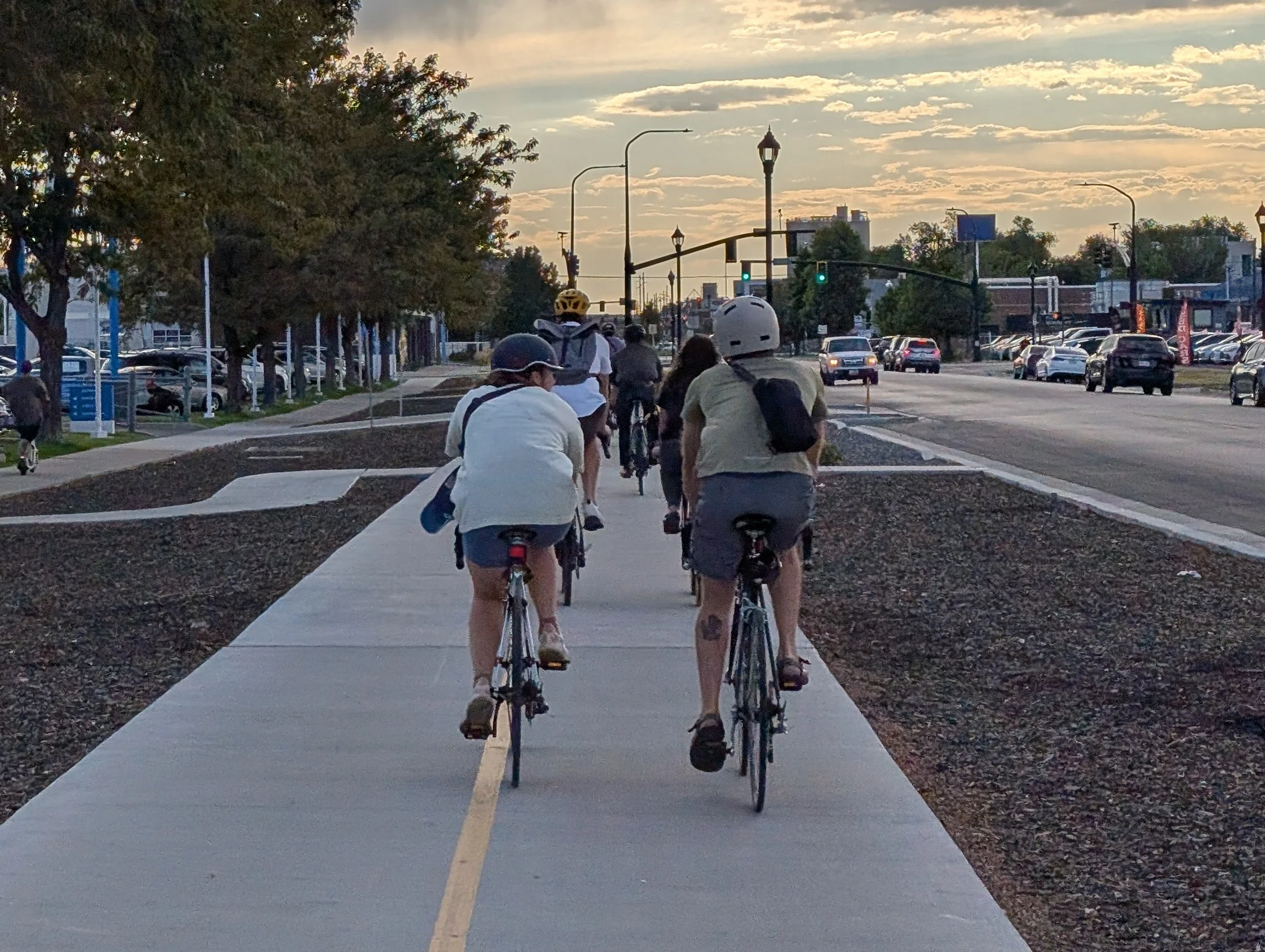
More people get out of their cars when they have a connected network of safe infrastructure.